 AZ
AZ EN
EN RU
RU
EXPERT: THERE IS NO CONTINENT UNAFFECTED BY DESERTIFICATION18 June 2026
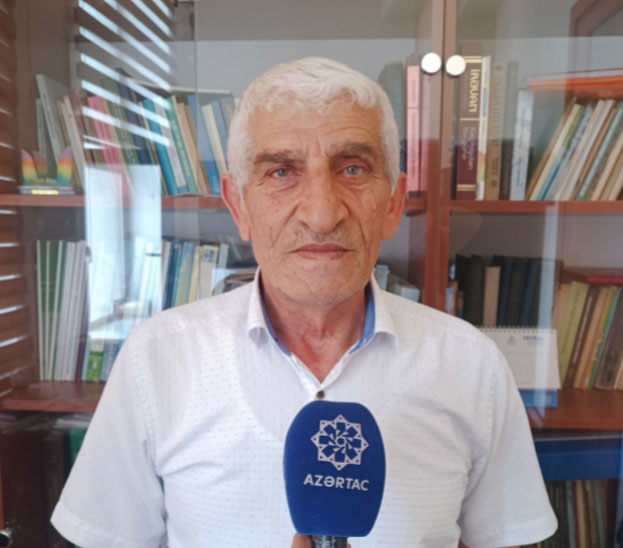
Desertification is both a regional and, to a large extent, a global problem. There is no continent or landmass that has remained untouched by desertification. Even Antarctica is sometimes excluded from such discussions, but this is not entirely correct. Antarctica is essentially a desert. In other words, desertification does not necessarily imply high temperatures. The concept is interpreted in different ways, but in my view, desertification can be defined as the process by which soil and landscapes completely lose their productivity and biodiversity. This was stated to AZERTAC by Mirnuh Ismayilov, Head of the Landscape Science and Nature Management Laboratory at the Institute of Geography of the Ministry of Science and Education, Doctor of Geographical Sciences, and Associate Professor. According to him, Africa, Australia, South America, North America, as well as the central, southwestern, and South Asian regions of Eurasia are currently among the major desertification zones. At the same time, the Caucasus region has not remained unaffected by desertification problems, and Azerbaijan is one of the countries most exposed to this phenomenon. “This is also reflected in international documents. Naturally, issues such as soil erosion, desertification, land degradation, and, more recently, climate change are all interconnected. To a certain extent, they serve as driving forces that accelerate the process of desertification. Currently, 60–65 percent of Azerbaijan’s territory is affected by desertification to varying degrees. Certain mountainous areas are exceptions, as they are generally characterized as territories not exposed to desertification,” he noted. Mirnuh Ismayilov stated that if the regions most severely affected by desertification in Azerbaijan were ranked, the Kur-Araz Lowland would come first. Other highly vulnerable areas include the Acinohur-Jeyranchol low mountain region, Nakhchivan, the southeastern slope of the Lesser Caucasus, including extensive parts of Karabakh and Eastern Zangezur. In addition, desertification affects the northern and central mountainous zones, as well as the low mountain areas of the Talysh Mountains. Areas located above approximately 1,000 meters above sea level are also under desertification risk. The southeastern slope of the Greater Caucasus, particularly the districts of Shamakhi, Gobustan, Absheron, and Khizi, the settlement of Altiaghaj, and territories along the Langabiz Range on the southern slope of the Greater Caucasus are also exposed to desertification threats. In Nakhchivan, nearly 80 percent of the territory is under desertification risk. These figures may vary by region. In the Kur-Araz Lowland, almost 100 percent of the territory faces desertification. “But how does desertification manifest itself? First of all, soil productivity declines. The main causes are salinization, waterlogging, and soil erosion. Erosion processes are more common in low and middle mountain zones. In high mountain areas, the degradation of subalpine and alpine meadows can also contribute to this process. Therefore, as degradation and erosion intensify, desertification becomes more severe and can create serious problems in affected areas. The Absheron Peninsula is among the territories facing particularly serious desertification risks,” he emphasized. The expert believes that greater attention should be paid to afforestation measures in combating desertification. “This includes the restoration of natural forests, the protection of lands belonging to the forest fund, and afforestation activities. Forest-covered areas account for only 11–12 percent of Azerbaijan’s territory. During afforestation efforts, priority should be given to establishing shelterbelt forests, restoring Tugay forests, and rehabilitating arid forests in low mountain regions. In fact, one of the primary causes of desertification is deforestation. Another major factor is salinization, which is a critical problem for the Kur-Araz Lowland. Soil salinization is currently taking place there. Beyond official statistics, our landscape research has shown that finding non-saline areas in the Kur-Araz Lowland is extremely difficult. At the same time, urban development continues to expand, with new roads being paved and houses being built. As a result, soils covered by buildings and asphalt roads are permanently removed from agricultural use. In such areas, neither productivity nor biodiversity can be maintained. This is yet another pathway leading to desertification. To address this issue, it is essential to strengthen ecological networks, establish new ones, and implement comprehensive environmental adaptation programs for all newly constructed roads and highways. We have also conducted research in this field. In short, combating desertification is possible and necessary. It requires a multifaceted and integrated approach. Government institutions, private organizations, and the public must all participate in this process. Desertification often begins with minor environmental problems, gradually expands, and eventually deepens. I hope that our country will be able to successfully overcome this challenge,” he concluded.  1178 1178 |
|



 |
 |
 |
 |
 |